Slip and fall incidents in Australian shopping centres, retail precincts, and public spaces cost businesses millions of dollars every year in liability claims, legal fees, and reputational damage. Most of those incidents follow the same pattern: a hazard appears — a spilled drink, a dropped bag, a stray cable — and nobody notices until someone is already on the floor.
The traditional response has been more staff, more cleaning rounds, and faster incident reporting. All useful. But none of them solve the core problem: a human can only watch one thing at a time, and no single person can monitor every walkable surface in a busy shopping centre at once.
That’s the gap AI video analytics was always going to fill. And a recent product release from Australian AI surveillance provider iCetana shows exactly how far the technology has come.
From Security to Safety: The Same Cameras, a New Job
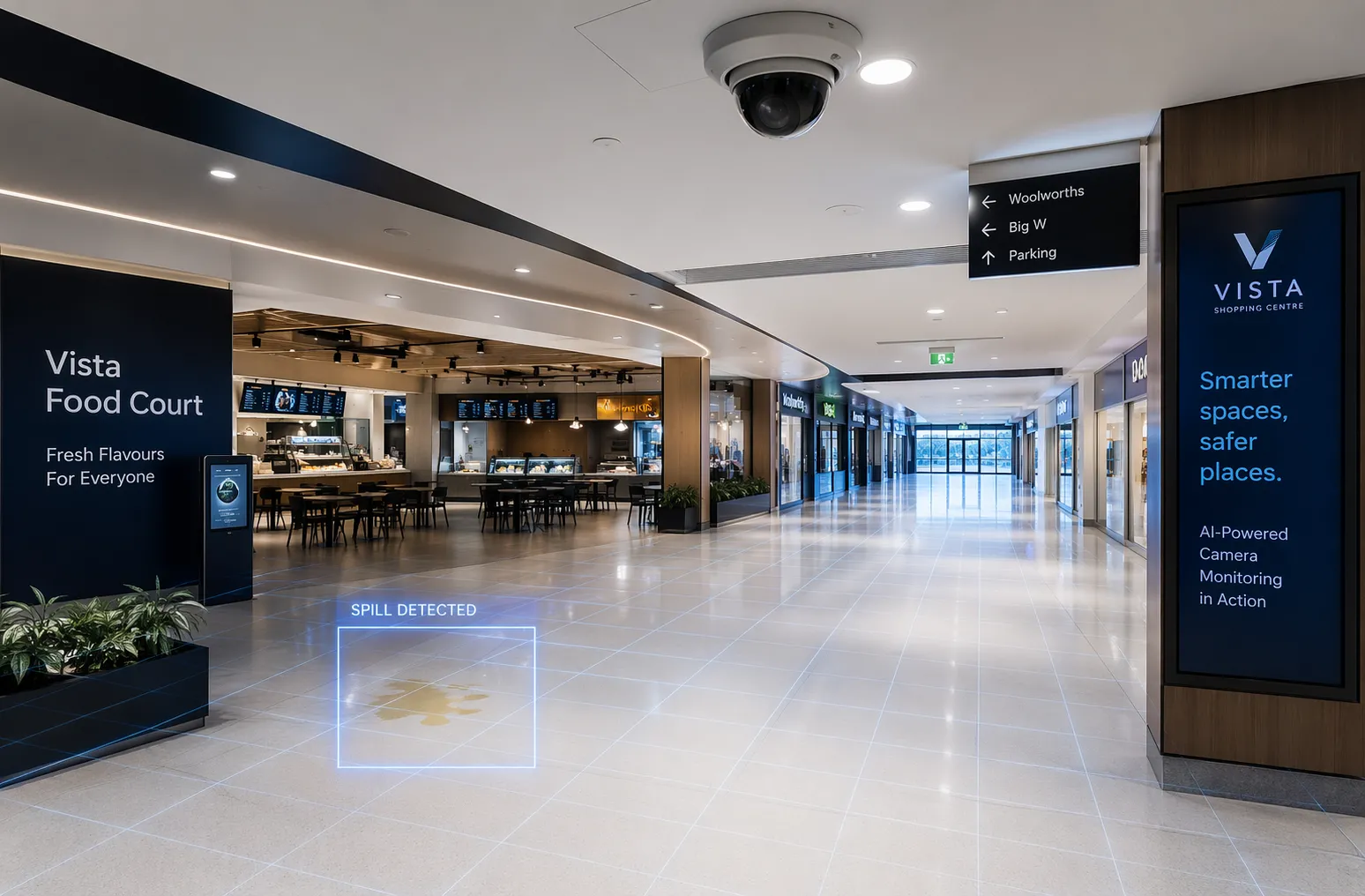
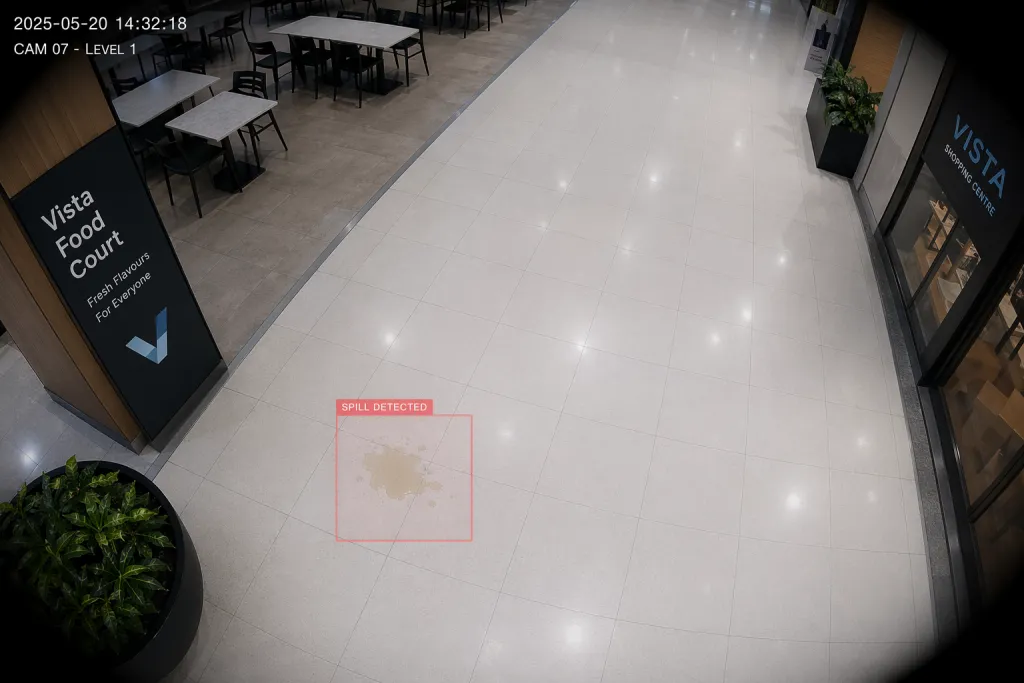
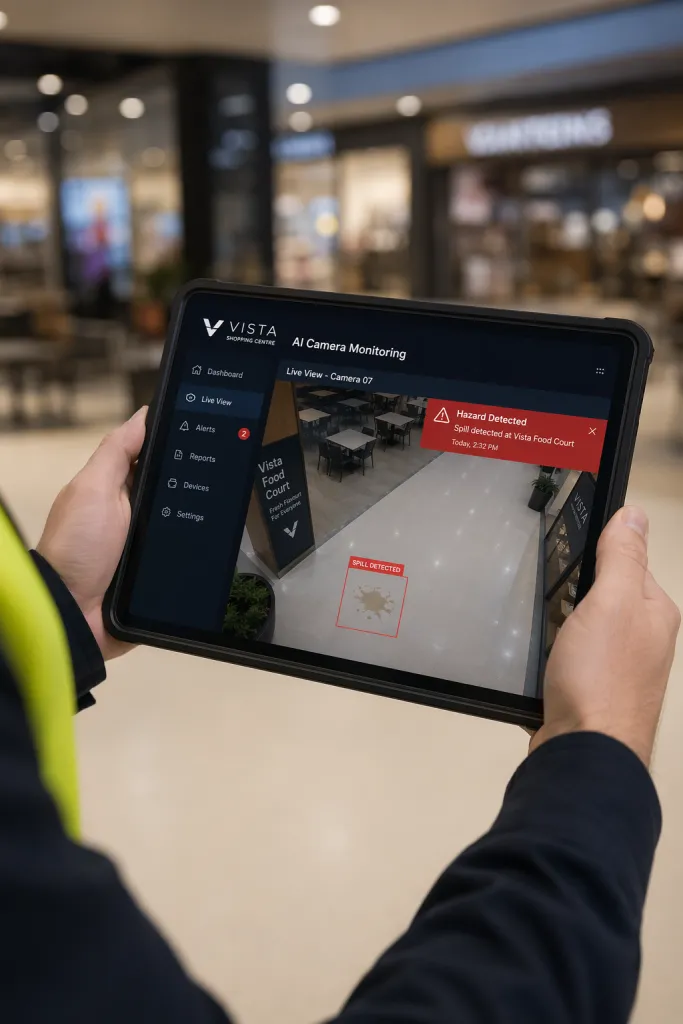
iCetana has publicly announced a hazard detection capability that extends its existing AI video analytics platform — originally built for security event detection — into facilities management. The system monitors walkable floor surfaces across a camera network in real time, identifies potential hazards, and alerts facilities teams within seconds of the hazard appearing on screen.
The types of hazards the system detects include spillages, food debris, cables running across walkways, litter, abandoned items, and structural issues like raised paving tiles. In each case, the alert reaches the relevant team before the hazard has a chance to become an incident.
What makes this technically significant is that it runs on existing CCTV infrastructure. You don’t need new cameras. The AI layer sits on top of what’s already installed and starts watching immediately.
Why This Matters for Australian Retail and Facilities Teams
The business case for hazard detection is straightforward. Under Australian consumer law and occupational health and safety obligations, building operators and retailers have a duty of care to maintain safe premises. A slip and fall claim — even one that doesn’t result in serious injury — can trigger legal proceedings, WorkCover investigations, and reputational scrutiny that costs far more than any cleaning round.
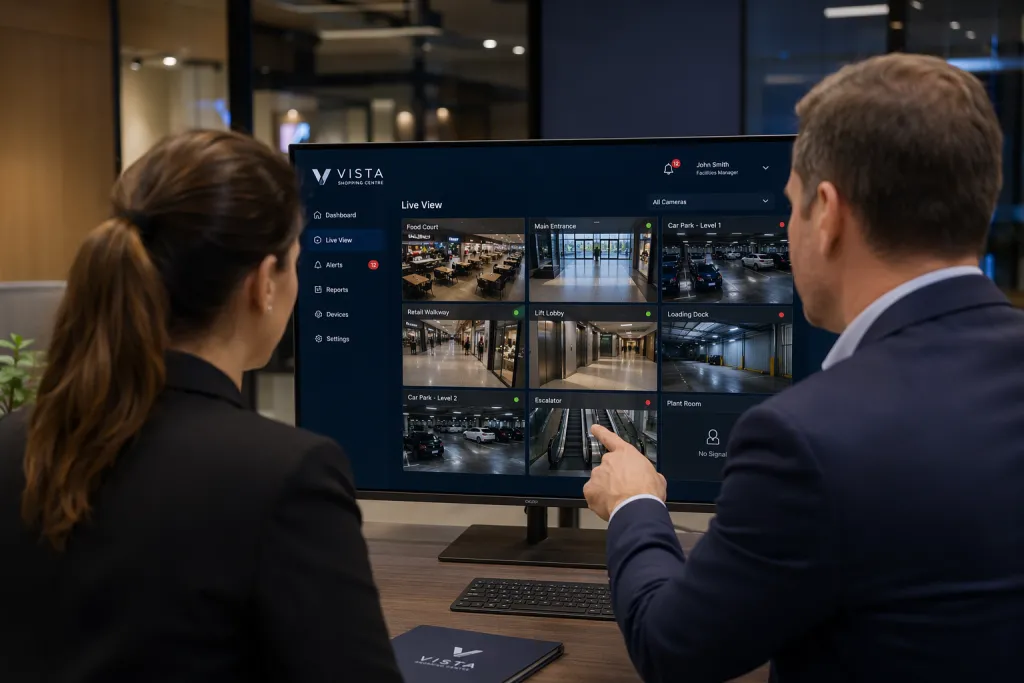
The harder problem is the human monitoring gap. A large shopping centre might have hundreds of cameras across multiple levels, food courts, entrances, car parks, and loading docks. No control room team can watch all of them continuously. Hazards go unnoticed not because staff aren’t diligent, but because the physical task of monitoring at that scale is beyond human capacity.
AI hazard detection removes that constraint. The system doesn’t get tired, doesn’t miss a frame, and doesn’t need to prioritise one area over another. It watches everything, simultaneously, and flags only the moments that need a human response.
What kinds of hazards does AI detect?
Based on publicly demonstrated capabilities, AI hazard detection systems can identify a broad range of floor-level risks in real time, including:
- Liquid spills and wet patches on walkways and food court floors
- Cables or power cords running across pedestrian pathways
- Abandoned items — bags, packaging, tools — left in public areas
- Food debris, litter, and paper materials that create slip risks
- Structural hazards such as raised paving, loose tiles, or damaged surfaces
Critically, the AI also provides written context alongside each alert — describing what it has detected and why it flagged it. This gives facilities teams the information they need to triage and respond, not just a notification that something happened.
The Broader Shift: Cameras as Operational Infrastructure
What iCetana’s announcement reflects is a broader shift in how AI surveillance is being positioned — and how forward-thinking facilities operators are starting to think about their existing camera networks.
For years, CCTV was treated as a single-purpose tool: record footage for review after an incident. The value was always retrospective. AI analytics changed that equation for security teams, enabling real-time threat detection, behavioural analysis, and proactive alerts. Now that same shift is happening for facilities and operations teams.
The cameras you already have installed are capable of doing significantly more than recording. Whether that additional capability is activated depends on the software layer running on top of them — and increasingly, that software layer is AI.
For Australian shopping centres, retail groups, and commercial property operators, this represents a genuine operational opportunity. The infrastructure investment is already made. Activating AI analytics is an incremental step, not a ground-up rebuild.
What to Consider Before You Deploy
AI hazard detection isn’t a plug-and-play solution. A few things to think through before activating any AI analytics layer on your camera network:
Camera coverage and positioning
The system can only detect what the cameras can see. Areas with blind spots, poor lighting, or outdated camera positioning may need a survey before deployment produces reliable results. A site assessment before activation is always worth doing.
Integration with your response workflows
An alert that reaches a control room but doesn’t have a clear escalation path to a cleaning or facilities team doesn’t prevent incidents — it just documents them faster. The technology is only as effective as the process it plugs into.
Your VMS compatibility
AI analytics platforms typically integrate via ONVIF or API connections to your existing video management system. This is a standard check before deployment, but one that’s worth doing early to avoid surprises during rollout.
These are the questions we work through with facilities and security teams at the start of every engagement. The technology is mature and the capability is real — the deployment detail is where the difference between a successful rollout and a frustrating one gets made.
See More. Respond Faster. Stay Secure.
If you manage a retail precinct, shopping centre, commercial building, or any site where the public gathers — and you’re curious about what AI analytics could realistically do on your existing camera infrastructure — we’re happy to walk through it with you.
No obligation, no lock-in contracts, honest advice.
To protect our clients privacy, all images on this post was AI generated. Alphalogix is a Sydney-based managed IT.
alphalogix.com.au